Nos experts à votre écoute :



Technical guide Everything you need to know about Silentbloc mounts and flexible bushes
A Silentbloc mount, also known as a rubber bush or flexible bush, is a mechanical component designed to provide a flexible connection between two elements while limiting the transmission of vibrations, shocks and some structure-borne noise.
These components are used in a wide range of applications: industrial machinery, engines, pumps, fans, onboard equipment, vehicles and mechanical systems subjected to repeated movement.
In this article, we take a closer look at their role, construction, the different types of flexible bushes, the criteria used to select the right reference and the signs indicating that a Silentbloc mount should be inspected or replaced.
View our flexible bushes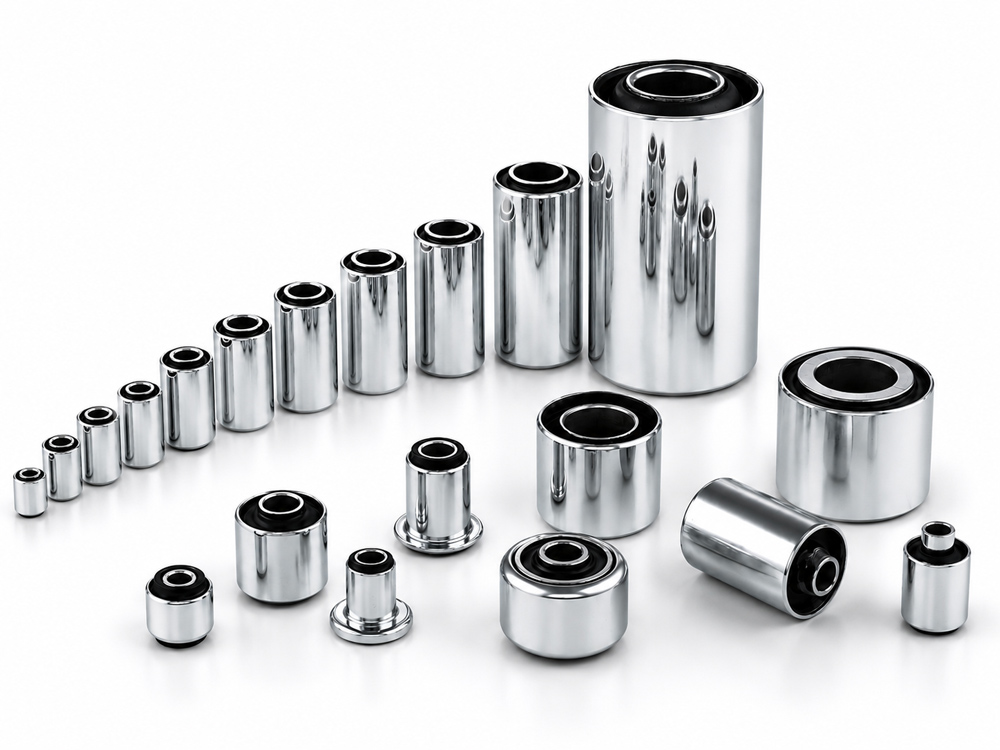
Table of contents
Definition What is a Silentbloc mount or flexible bush?
Originally, Silentbloc referred to a brand historically associated with Paulstra. Today, the term is widely used to describe a component that provides a flexible connection between two mechanical elements.
A flexible bush generally combines metal components with an elastomer element. When the assembly is subjected to movement, load or vibration, the elastomer deforms to provide the connection while avoiding a completely rigid mechanical contact.
This design helps to limit vibration transmission, absorb certain shocks, reduce friction and contribute to a longer service life for equipment.
Silentbloc mounts and flexible bushes are therefore used in a wide range of industrial applications: engines, pumps, fans, machinery, onboard equipment and mechanical systems subjected to repeated movement.
Good to know: several spellings and names are commonly used, including Silentbloc, silent block, Silent Block, cylindrical rubber bush, flexible mounting or flexible bush. These terms may refer to similar principles, but the geometries, mounting methods and permissible loads or movements can vary depending on the reference.
.jpg)
How it works What is the role of a Silentbloc mount?
The role of a Silentbloc mount is not limited to damping vibration. Depending on its mounting arrangement, geometry and material, it can perform several functions within a mechanical system.

Limit vibrations
The elastomer helps reduce the transmission of vibrations between a machine, its components and its supporting structure.

Absorb shocks
The deformation of the elastomer helps absorb some of the impacts and mechanical stresses transmitted between two components.

Reduce structure-borne noise
By limiting vibrations transmitted to the structure, a Silentbloc mount can also help reduce structure-borne noise.

Protect equipment
A correctly sized flexible connection can reduce certain mechanical stresses and help protect machine components.
Applications Where are Silentbloc mounts and flexible bushes used?
Industrial applications
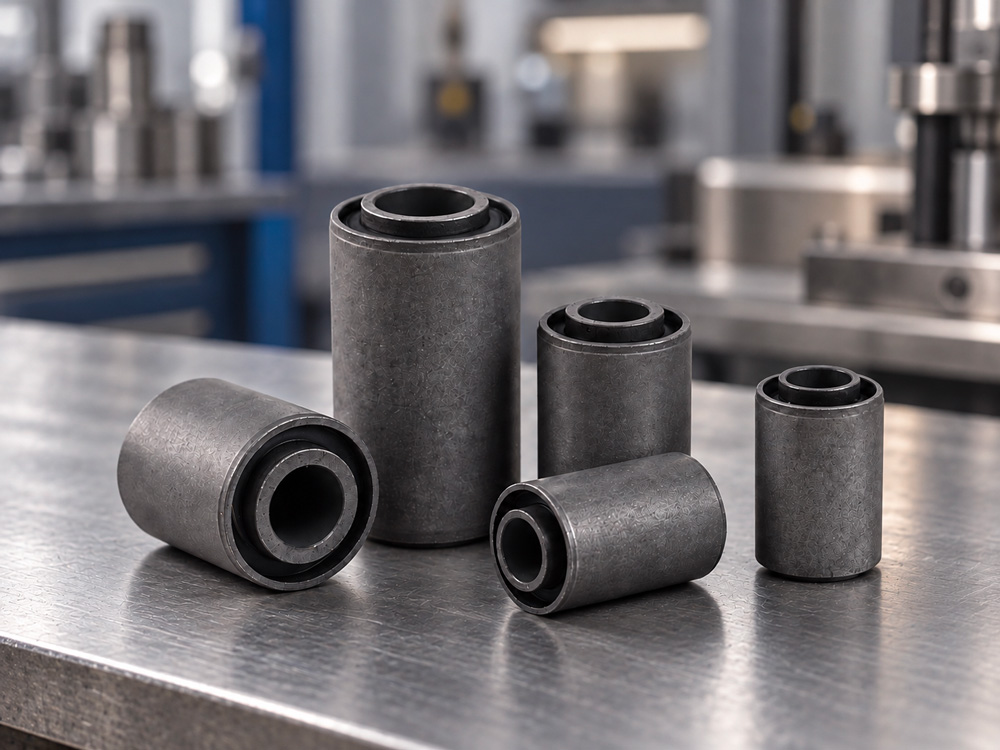
The Paulstra flexible bushes offered by Solutions Elastomères are primarily designed for industrial applications.
They can be used on engines, pumps, motor-driven fans, onboard equipment, machinery, hoppers, vibrating tables and other mechanical assemblies requiring a flexible connection.
Depending on the mounting arrangement, they provide articulation between different components while limiting the transmission of vibrations, friction and certain mechanical stresses.
For mechanical power transmission systems, our range of flexible couplings can also be considered to reduce certain vibrations generated by the transmission.
Design How is a Silentbloc mount constructed?
A conventional flexible bush consists of an elastomer element fitted between two cylindrical metal components or sleeves.
In many references, the elastomer used is natural rubber. It deforms when the two metal sleeves are subjected to relative movement, load or torque.
For certain limited-movement applications, this design creates a flexible articulation without using a conventional bearing principle. It can therefore reduce lubrication requirements and simplify certain maintenance operations.
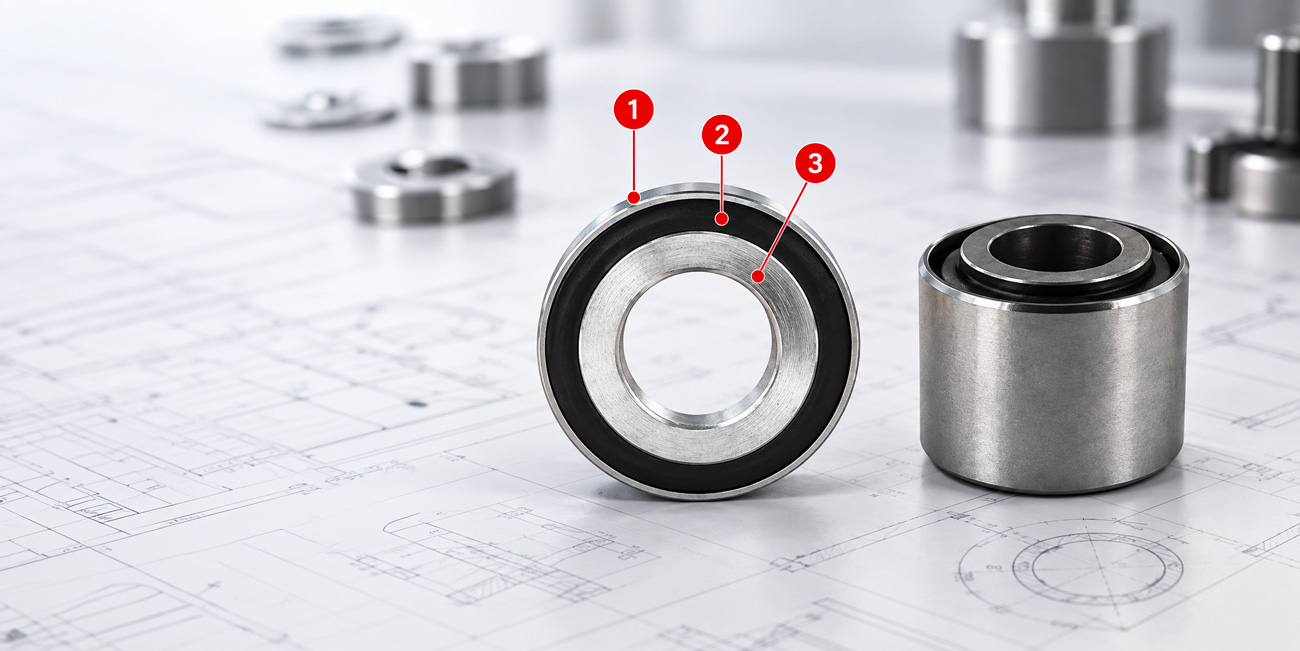
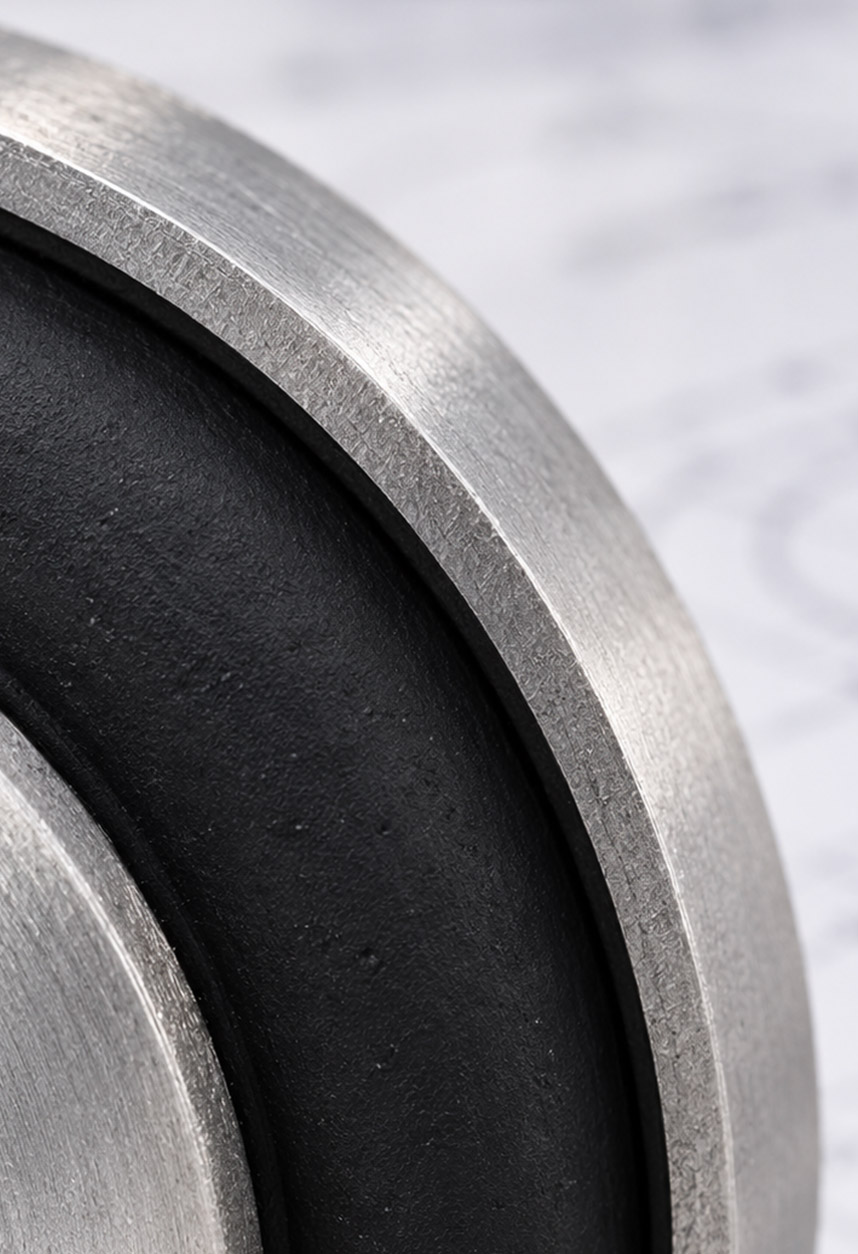
Outer sleeve
It provides the connection to one of the components in the assembly and carries part of the mechanical load.
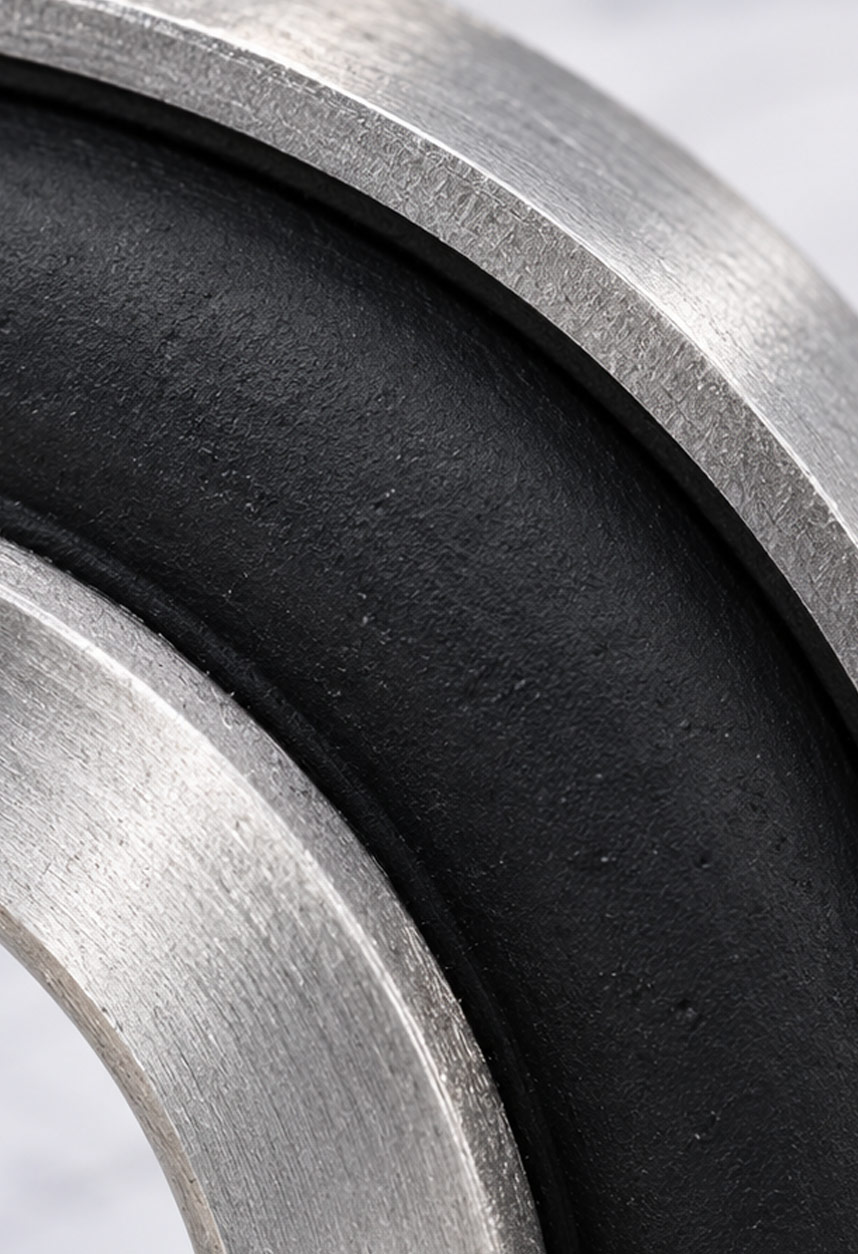
Elastomer
The flexible section deforms under loads, movements or vibrations and largely determines the mechanical behaviour of the bush.
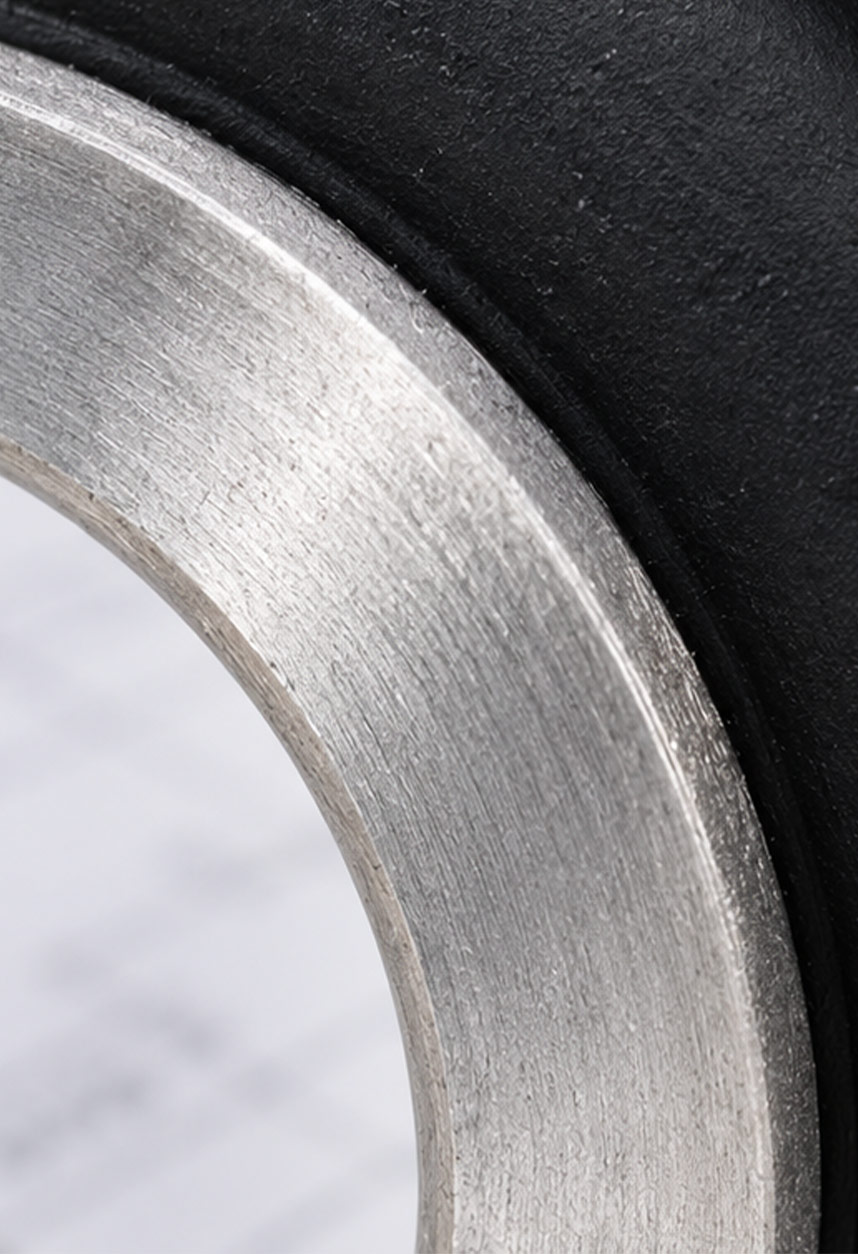
Inner sleeve
It forms the second mechanical connection point and allows forces to be transmitted through the elastomer element.
What role does Shore hardness play?
Shore hardness contributes to the mechanical behaviour of the elastomer, but a harder material is not automatically a better solution. The choice depends on the load, expected displacement, geometry of the Silentbloc mount and the required level of vibration isolation.
Main families Different types of flexible bushes
Flexible bushes are available in several designs to meet different mechanical requirements. Historical configurations in the Paulstra range include the Flexibloc, the Silentbloc and certain lateral stops.
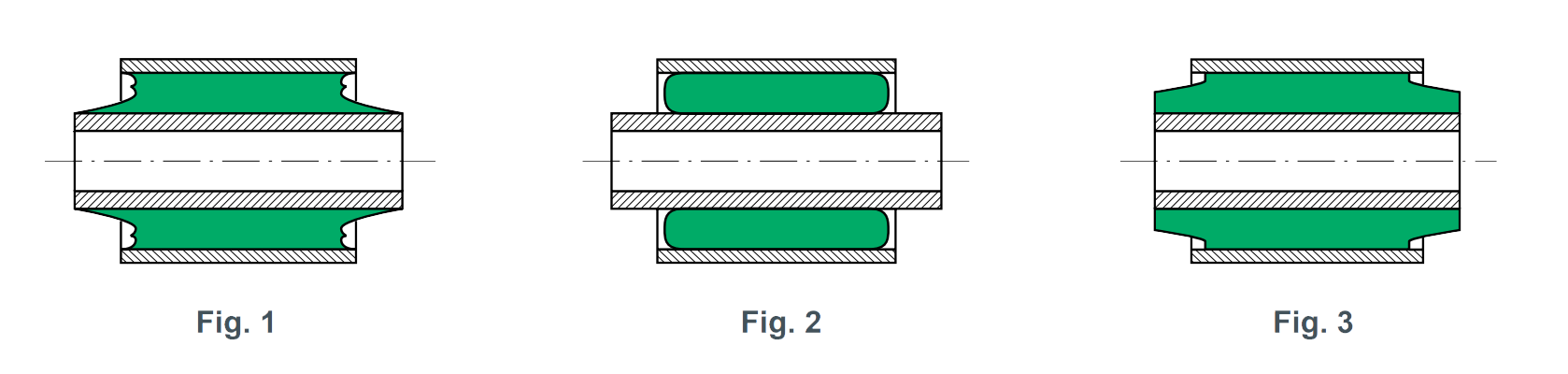
Flexibloc
The Flexibloc consists of two cylindrical components with a layer of elastomer between them.
Under external forces or torque, the relative movement of the sleeves causes deformation of the elastomer. The assembly must therefore remain within the displacement and elasticity limits specified for the reference.
Silentbloc
The Silentbloc consists of two cylinders with an elastomer ring fitted between them.
When the sleeves move relative to one another, the elastomer works through elastic deformation. Again, permissible movements must remain compatible with the design of the component.
Lateral stop
When the elastomer extends beyond the outer sleeve to form a bearing area, the flexible bush can also provide a lateral stop function.
This configuration adds a travel-limiting or support function depending on the mechanical assembly.
Correct sizing How to choose the right Silentbloc mount?
A Silentbloc mount or flexible bush must be selected according to the actual application. A reference suitable for a static load will not necessarily be suitable for an assembly subjected to displacement, high temperatures or specific vibrations.
Load capacity
Equipment weight, permanent force or occasional load: the load is one of the first essential selection criteria.
Type of movement
Oscillation, limited rotation, radial or axial displacement, or torsion: the movement must be identified before selecting the component.
Stiffness and elasticity
Geometry, material and Shore hardness influence the stiffness and dynamic behaviour of the flexible bush.
Temperature
The operating temperature and possible proximity to a heat source can influence the choice of elastomer.
Environment
Humidity, oils, dust, outdoor exposure or chemical agents can affect rubber ageing.
Dimensions and mounting
Diameters, length, mounting method and available space must match the geometric characteristics of the selected reference.
Maintenance Why and when should a Silentbloc mount be replaced?
Like any elastomer component subjected to repeated loads, a Silentbloc mount can change over time. Its service life depends in particular on the load, number of cycles, movement amplitude, temperature and operating environment.
An ageing flexible bush can gradually lose some of its properties and alter the mechanical behaviour of the machine. Regular inspections are therefore recommended, particularly when equipment operates intensively.
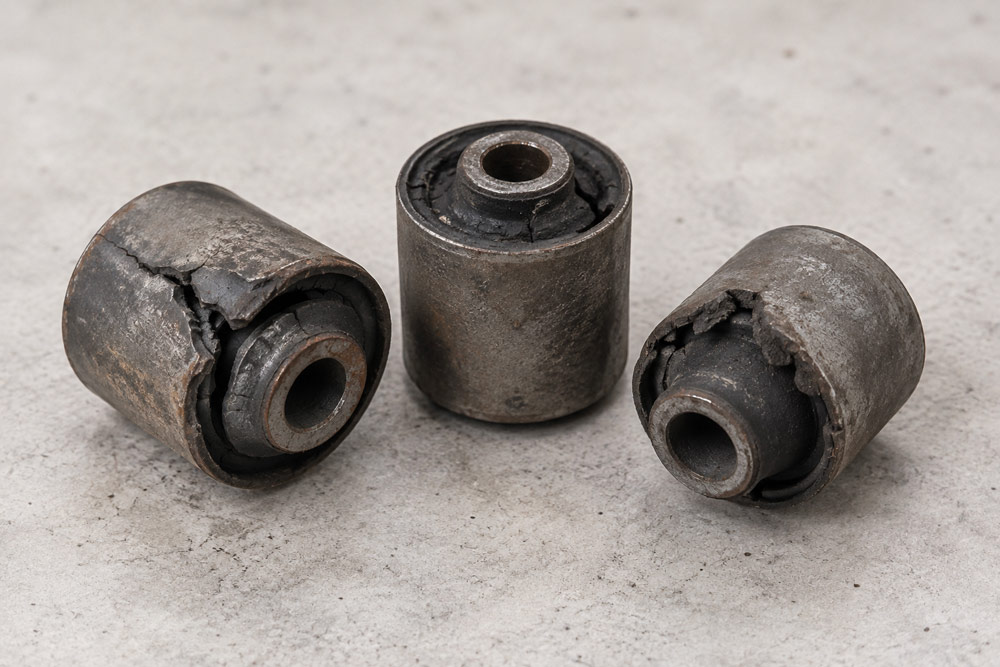
What signs can indicate that a Silentbloc mount is worn?
Unusual vibrations
A noticeable increase in vibration may indicate a change in the behaviour of the assembly.
Cracks or deformation
Cracking, permanent compression or significant deformation of the elastomer should be inspected.
Bond failure
Separation or failure between the metal component and elastomer can compromise the function of the flexible bush.
Noise or jolting
New mechanical noises or jolting during start-up may justify inspecting the connection points.
Key points Silentbloc mounts and flexible bushes: the essentials
A Silentbloc mount is a flexible mechanical connection generally combining one or more metal sleeves with an elastomer.
It helps limit certain vibrations, absorb mechanical stresses and avoid a completely rigid connection between two mechanical components.
The choice of a flexible bush depends on many parameters: load, movement, dimensions, stiffness, temperature and environment.
Finally, regular inspection of the elastomer and metal sleeves helps detect signs of ageing or failure before they affect machine operation.
Frequently asked questions FAQ about Silentbloc mounts and flexible bushes
How do you choose the right Silentbloc mount for an industrial application?
You need to know the load, type of movement, available dimensions, temperature, environment and required level of vibration isolation. This information helps identify a suitable flexible bush.
How can you extend the service life of a Silentbloc mount?
It is important to respect the permissible loads and movements, avoid exposure that is incompatible with the elastomer and regularly inspect its condition to identify cracks, deformation or bond failure.
What is the difference between a natural rubber Silentbloc mount and a polyurethane mount?
Performance depends on the formulation, geometry and application. Natural rubber is widely used for its elastic and dynamic properties. Polyurethane may be considered when different mechanical characteristics or greater wear resistance are required.
How do Silentbloc mounts reduce noise?
By limiting the transmission of certain mechanical vibrations to the structure, they can help reduce structure-borne transmission, which is responsible for some of the noise generated by machinery.
How can I obtain information about a reference or its availability?
To check a reference, dimension or product availability, please contact our technicians on +33 4 77 47 51 92 or by email at [email protected].
Need help? Looking for a Silentbloc mount or flexible bush?
Our technicians can help you identify a suitable solution based on your dimensions, load, movements and installation constraints.
Contact us with your technical information so that we can guide you towards a suitable reference.